
We Will Never Forget - Holocaust Remembrance Day is April 12
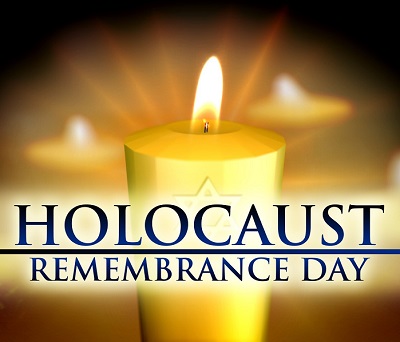
“Although words do pale, yet we must speak. We must strive to understand. We must teach the lessons of the Holocaust. And most of all, we ourselves must remember. We must learn not only about the vulnerability of life, but of the value of human life. We must remember the terrible price paid for bigotry and hatred and also the terrible price paid for indifference and for silence...” - President Jimmy Carter, 1979
The Days of Remembrance take place each year over an eight day period, Remembrance Day, which marks the anniversary of the Warsaw Ghetto Uprising, will be held on April 12. The Hebrew name, “Yom Hashoah Ve-Hagevurah” means “The Day of the Holocaust and the Heroism.” It is a day to remember those who suffered, those who died, and those who fought.
Although the Holocaust took place more than 70 years ago, it is an event we must never forget. One of the darkest times in modern history, more than six million Jews and other targeted groups, such as gypsies and homosexuals who did not follow the Nazi’s social norms, were murdered by the Nazi regime and its collaborators.
The first Remembrance Day took place on December 28, 1949, within two years after Israel’s independence. Ashes and bones of Jews from a concentration camp were placed in a crypt with decorated Torah scrolls. The public was invited for a commemorative prayer service to honor the victims. The following year, more than 70 ceremonies were held throughout the country.
Each year, Remembrance Day takes place on the 27th day of the month of Nisan on the Hebrew calendar. This date was selected in a resolution passed by Israel’s Parliament in 1951, and has since become the day commemorated throughout the world. The day’s official name,“Holocaust and Heroism Remembrance Day,” was made official in 1953, and in 1959 an additional law was passed that tribute should be paid to the victims of the Holocaust and ghetto uprisings in public observances.
In 1978 President Carter signed an Executive Order that established the President’s Commission on the Holocaust. Chaired by Elie Wiesel, one of its mandates was to create a memorial to victims of the Holocaust. In 1979 the President’s Commission on the Holocaust commemorated the day in the U.S. Capitol. The observance was attended by the President, Vice President and members of Congress.
Congress established Days of Remembrance as our country’s annual observance of the Holocaust. In Washington, D.C. The United States Holocaust Memorial Museum was created in 1993 as a permanent memorial to the victims of the Holocaust. The Museum leads the nation in commemorating the Days of Remembrance and for encouraging observances throughout the nation. State and local governments, schools, religious organizations, military bases and civic centers hold activities to commemorate the week, often featuring a presentation from a Holocaust survivor.
A revised guide for the Days of Remembrance for the Victims of the Holocaust was issued by the Department of Defense in 1989. President George H.W. Bush stated, “Our challenge today is to remember the Holocaust, for if we remember we will, as our soldiers did, look its evil in the face.... For memory is our duty to the past, and memory is our duty to the future.” We must never forget!
Related products you may like:
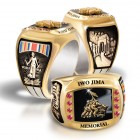
WWII Military Service Rings
Featuring the WWII Service Medal & Ribbon, the WWII War Memorial, Your Service Branch Emblem in 10 KT Gold, and Personal Birthstones
read more »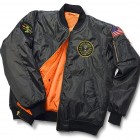
United States Military MA-1 Flight Jacket
Personalized with Your Service Branch Patch - PLUS Optional Veteran Patch
read more »Testimonials:
-
I received my United States MA-1 Bravo Jacket yesterday and I am very pleased with it. Thanks
Charles W
-
I received my U.S. Military War Veteran Birthstone Ring this morning. It's awesome, and I'm so glad that I ordered it through Veterans Commemoratives. Needless to say, I'm very happy. Thank you so much.
Randy C.
-
What a nice Christmas gift. I've got my Air Force Career Ring on my finger right now. There's nothing shabby about it! I'm very proud to have it. Thanks to all of you at vetcom.com. Merry Christmas and have a Happy New Year!
Willilam J.
-
Thank you very much for the two beautiful garments! Both the MA1-Bravo Jacket and the Concealed Carry Soft Shell Vest fit perfectly and are tailored to perfection. They are rugged and warm, exactly what I was looking for.
Ed J.


